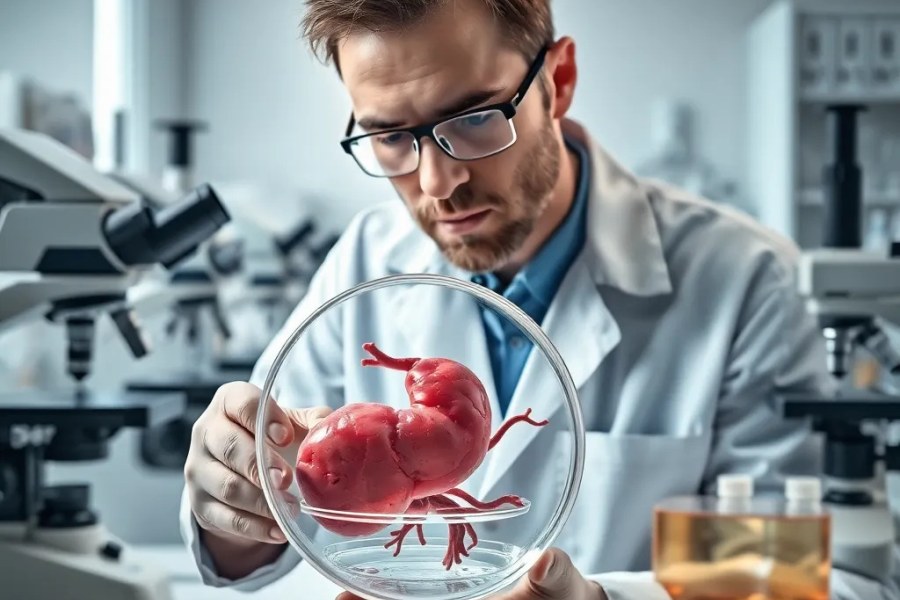
A revolutionary breakthrough in regenerative medicine has been achieved by a team of researchers at the University of California, Los Angeles (UCLA), who have successfully developed a novel method for growing human organs in a laboratory setting. This pioneering discovery, recently published in the esteemed journal Nature, has the potential to transform the field of organ transplantation and significantly increase the availability of organs for transplant, thereby saving countless lives.
The research team, led by the distinguished Dr. Maria Rodriguez, a leading expert in regenerative medicine, employed a innovative approach that combines stem cells with a specialized gel-like material to create a scaffold that supports the growth of human organs. The biodegradable scaffold provides a framework for the stem cells to grow and differentiate into various cell types, ultimately forming a fully functional organ. This groundbreaking technique has far-reaching implications for the medical community and could lead to a substantial increase in the availability of organs for transplant.
The researchers have already achieved remarkable success in growing several types of organs, including kidneys, livers, and hearts, using this method. The organs produced were found to be fully functional and capable of performing all the necessary functions of a healthy organ. This breakthrough has the potential to revolutionize the field of organ transplantation, which could save thousands of lives each year. The ability to grow human organs in a laboratory setting could also lead to the development of new treatments for a wide range of diseases and injuries, including organ failure, which is a major cause of death and disability worldwide.
The discovery is expected to have a profound impact on the medical community, as it could lead to the development of new treatments for various diseases and injuries. For instance, the ability to grow human organs in a laboratory setting could lead to the development of new treatments for organ failure, which could significantly improve patient outcomes and quality of life. Additionally, this breakthrough could also lead to the development of new methods for growing other types of tissues and organs, which could result in even more breakthroughs in the field of regenerative medicine.
The researchers are now working to refine their method and make it more efficient and cost-effective. They are also exploring new methods for growing other types of tissues and organs, which could lead to further breakthroughs in the field of regenerative medicine. As the field of regenerative medicine continues to evolve, it is likely that we will see significant advancements in the coming years, which could lead to improved patient outcomes and a better quality of life for individuals suffering from various diseases and injuries.
The potential applications of this breakthrough are vast and far-reaching. For example, the ability to grow human organs in a laboratory setting could lead to the development of new treatments for diseases such as diabetes, kidney disease, and heart disease. Additionally, this breakthrough could also lead to the development of new methods for repairing or replacing damaged tissues and organs, which could significantly improve patient outcomes and quality of life. As the medical community continues to explore the possibilities of regenerative medicine, it is likely that we will see significant advancements in the coming years, which could lead to improved patient outcomes and a better quality of life for individuals suffering from various diseases and injuries.